Boise, Idaho, receives snowfall during the winter months. The city gets an average snowfall of 17.6 inches annually. However, most of it falls between November and March. Generally, January is the snowiest month, while December and February also receive regular snowfall.
Nonetheless, Boise does not experience heavy snow throughout the entire winter due to its mild semi-arid climate. Owing to this, snow melts quickly on the ground before storms. Also, compared to the city, surrounding mountains receive steady snowfall. For the same reason, the city becomes an appealing area for winter activities.
When Does it Snow in Boise?
Typically, snow season in Boise begins in late fall/autumn. In addition, it stays till early spring. Besides, most of the snowfall occurs from November to March, though it can occur earlier or later in different seasons.
- First Snowfall: The average date for the first snowfall in Boise is November 23. However, it can happen earlier than this date. According to the National Weather Service, October 10 is the reported date for the first snowfall. But snow showers can be experienced earlier than October 10 too.
- Peak Snow Months: The main snowfall months are December to February. However, January is generally considered to be the snowiest month. It receives an average of 6 inches of snowfall. December follows January with roughly 5 inches of snow, while February has about 4 inches of snowfall.
- Last Snowfall: The average date for the last snowfall in Boise happens to be March 24. In contrast, snow can be expected any time in April. As per the historical records, the last snowfall occurred on May 26.
How Much Does it Snow in Boise, Idaho?
Based on the National Weather Service’s 1991 to 2020 climate normals, Boise, Idaho, receives 17.6 inches of annual snowfall. But compared to other cities in the USA, the city receives less snowfall.
Heavy snowstorms can occur but are not common in Boise. The city’s maximum 24-hour snowfall in 24-hours was 8.4 inches. It was recorded at the airport on January 20, 2002.
Also, the snowfall amount differs between the valley of Boise and the nearby mountains, with Bogus Basin receiving about 250 inches of snow per year. This amount is higher than on the valley floor of the city.
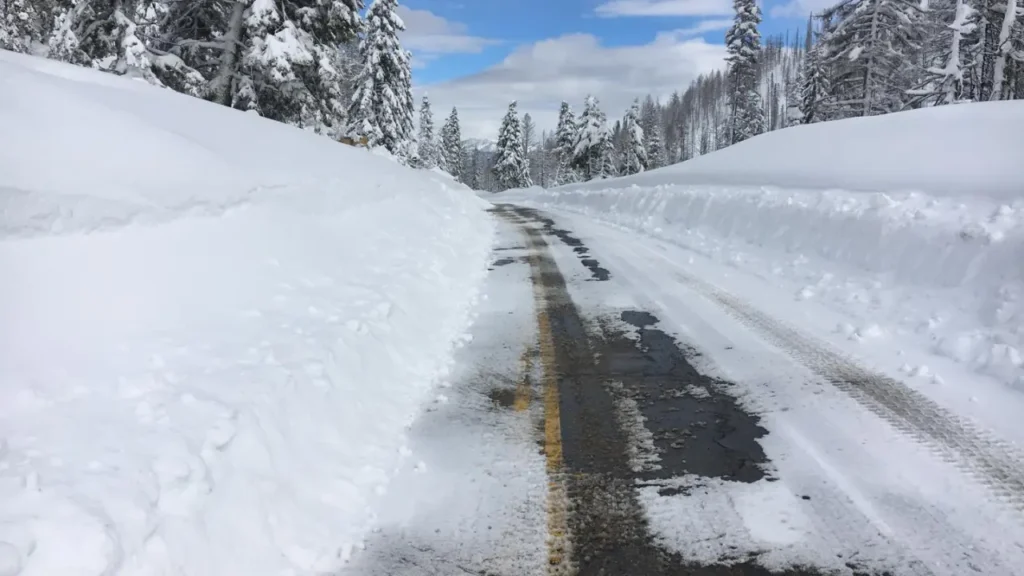
Besides, here are some statistics about snowfall in Boise:
| Average yearly snowfall | 17.6 inches |
| Main snow season | November to March |
| First measurable snowfall | November 23 |
| Last measurable snowfall | March 24 |
| Snowiest month | January |
| January average snowfall | 6 inches |
| December average snowfall | 5 inches |
| February average snowfall | 4 inches |
| March average snowfall | 2 inches |
What are Winter Temperatures Like in Boise?
Winter temperatures in Boise are cold enough to have snow. Despite this, it is usually warm enough to melt it after every storm.
- High temperatures in January are about 39° F.
- Low temperatures are about 26° F.
- Besides, high temperatures in February average 46° F, while lows average 29° F.
- This fluctuation in temperature explains why there is no constant cover of snow in Boise during winter.
- Snow can fall and then melt when temperatures increase.
Best Time to See Snow in Boise
The best time to see snow and enjoy winter activities in Boise is between December and February. In addition, January has the highest average snowfall in the city.
- However, to indulge in skiing and snow, one can opt for Bogus Basin.
- This destination gets a lot more snow than the city of Boise.
- Per year, it receives about 250 inches of snowfall.
- Hence, it allows tourists to experience the mild conditions in Boise as well as snow at Bogus Basin on the same day.
- After enjoying the snow, visitors can explore many restaurants in Boise to satisfy their appetite.
In sum, tourists can enjoy regular snowfall in Boise. However, due to its climate, it melts quickly. To make the most of it, tourists can explore nearby mountains, as they receive a good amount of snow. Owing to this, these regions are suitable for skiing as well as winter activities.
FAQs
Yes, the city receives snow every winter, but the amount varies every year.
Usually, snow starts falling in the city of the USA in November.
January is considered to be the snowiest month in Boise, with an average snow amount of about 6 inches.
On average, Boise usually gets about 17.6 inches of snow a year. However, the amount may vary year-to-year.
Often, snow melts in the city in a few days because winter temperatures can rise above freezing. However, snow can last longer in colder periods.