Boise, Idaho, is not a woodland. This is because it is located in a semi-arid steppe environment. According to the Köppen climate classification system, the city is classified as having a “BSk” climate (cold semi-arid steppe climate).
However, at first glance, it can be assumed that Boise is greener than many other places in the western United States. In contrast, the vegetation type of the “City of Trees” is dominated by shrubs, grasses, and sagebrush rather than forests.
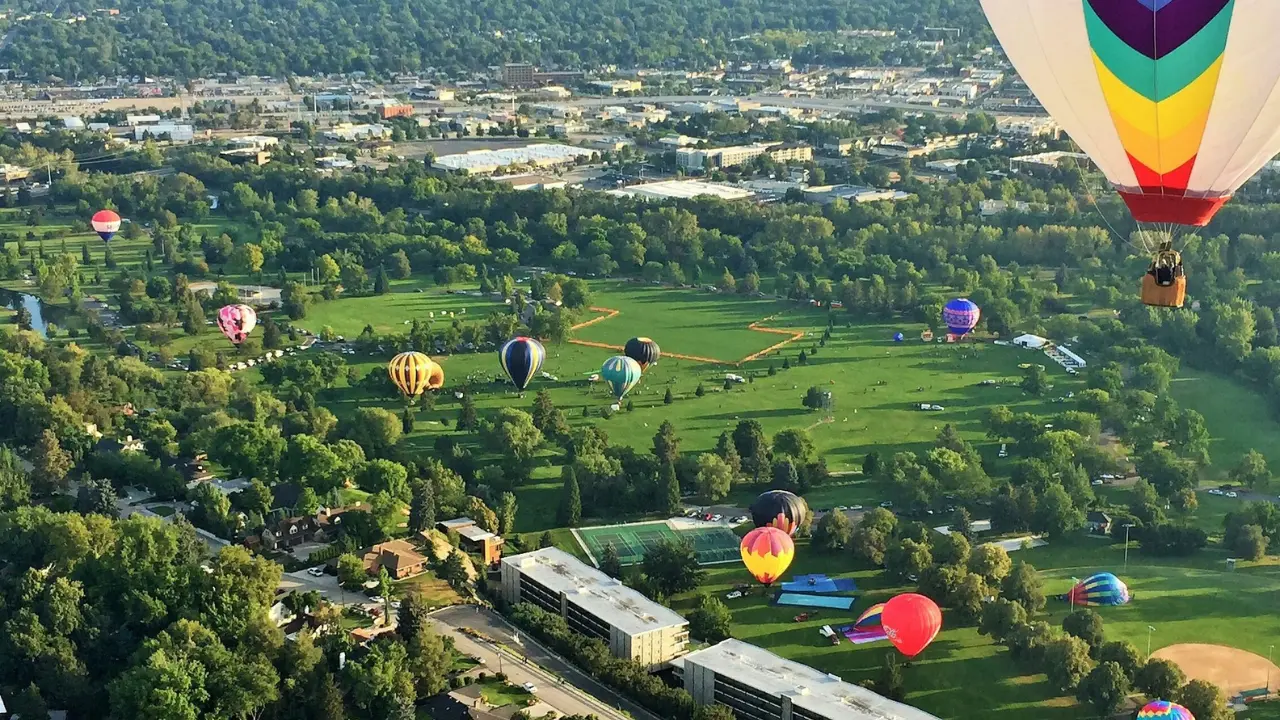
Additionally, trees can be found on the banks of the Boise River as well as in many parks and neighborhoods, but they rely on the Boise River as well as irrigated land for their sustenance. So, these trees do not change the classification of Boise as being a semi-arid steppe.
Is Boise, Idaho a Woodland? The Truth Behind the City of Trees
Boise is not considered a woodland. Typically, a woodland is defined as an ecosystem that consists primarily of trees that are not as densely cultivated as they would be in a forest. These ecosystems usually get enough precipitation in the form of rain or snow for trees and other vegetation to grow over large areas.
- Boise does not satisfy these criteria.
- The city has a very dry climate with little rainfall.
- This results in the absence of dense tree cover.
- In fact, the surrounding area consists mostly of open hills, sagebrush, and wild grasses.
- Due to such climatic conditions, the city is classified as a semi-arid steppe and not a woodland or forest.
What is Boise’s Climate Classification?
According to the Köppen-Geiger climate classification system, Boise lies under the BSk (cold semi-arid steppe) category. This type of climate is characterized by low rainfall, hot and dry summers, and cold winters.
Although this area receives more moisture than a real desert, it does not get enough moisture to support forest or woodland growth. The “B” here means dry climate, and the “S” stands for steppe. This means that grasses and shrubs grow well in this region, but there are not many trees.
What is a Steppe Region?
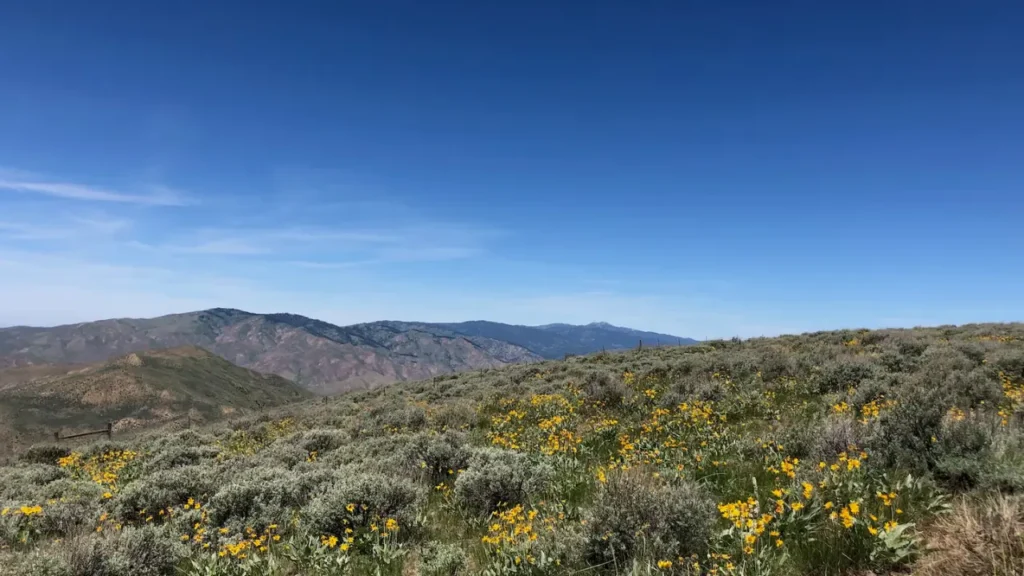
A steppe region has many herbs and bushes because of little rainfall. Trees do not grow continuously here like in a forest. Trees can be found in limited places where water is available, for example, riverbanks, riverbeds, and wetlands. This is the same as the natural environment of Boise, where there are no trees growing like in the woods.
What is Boise’s Natural Landscape Like?
Boise Valley is surrounded by hilly regions and flat landscapes shaped by the dry climate. Here, native vegetation consists of sagebrush, rabbitbrush, bitterbrush, bunchgrasses, and wildflowers.
- Trees grow close to water sources, such as the Boise River.
- Hence, as the distance from the water source increases, tree density decreases considerably.
- Also, vegetation changes to shrubs.
- This is one of the clear signs that Boise cannot be called a forest or woodland area.
Why Does Boise Have So Many Trees?
One major reason why people see Boise as a woodland area is because of the huge tree cover in the city. There are three main aspects behind the presence of so many trees in Boise.
- The Boise River, which contributes to the growth of cottonwoods and willows.
- Irrigation systems in Boise for supplying water throughout the city.
- Decades of planting trees in parks and neighborhoods.
- These factors make Boise greener than its surrounding area.
- However, the natural biome of its region is a semi-arid steppe.
Is Boise a forest?
No, because in order to be considered a forest, there should be a lot of trees covering large areas. In addition, it should be rainier than Boise’s dry climate. Instead, forests are located in the nearby mountains. At those places, higher altitude creates a cooler climate and gets more rain.
Examples of forests include:
- Boise National Forest
- Bogus Basin
- Idaho City
- Lucky Peak area
Note: Visitors planning to explore these forests can use a Boise Car Rental service, as these destinations are easiest to access by road.
Conclusively, Boise is not a woodland, but a BSk region. Despite its greenery, its natural landscape is mostly dry and supports shrubs and grasses. Besides, true forests and woodlands are found in the nearby mountains, where higher elevations receive more rain and snowfall.
FAQs
Because of the dense cottonwood trees growing along the Boise River, this place is known as the “City of Trees”.
Cottonwood, willow, and boxelder are some of the common trees found in the city.
Indeed, there are several forests near the city, including Boise National Forest, Bogus Basin, Lucky Peak, and the mountains around Boise City.
No, Boise receives lower annual rainfall than surrounding areas. For this reason, it does not have many woodlands.
Yes, the city is greener than many nearby areas because of its river corridor and irrigation.